Author: Moses I. Finley

Date of birth: 1912
Date of death: 1986
Website:
Sir Moses I. Finley CBE, FBA (May 20, 1912–June 23, 1986) was an American and English classical scholar. His most notable work is The Ancient Economy (1973), where he argued that status and civic ideology governed the economy in antiquity rather than rational economic motivations.
He was born in 1912 in New York City as Moses Israel Finkelstein to Nathan Finkelstein and Anna Katzenellenbogen; died in 1986 as a British subject. He was educated at Syracuse University and Columbia University. Although his M.A. was in public law, most of his published work was in the field of ancient history, especially the social and economic aspects of the classical world.
He taught at Columbia University and City College of New York, where he was influenced by members of the Frankfurt School who were working in exile in America. In 1952, during the Red Scare, Finley was fired from his teaching job at Rutgers University; in 1954, he was summoned by the United States Senate Internal Security Subcommittee and asked whether he had ever been a member of the Communist Party USA. He invoked the Fifth Amendment and refused to answer.
Unable subsequently to find work in the United States, Finley moved to England in 1955, where he taught classical studies for many years at Cambridge University, first as a Reader in Ancient Social and Economic History at Jesus College (1964–1970), then as Professor of Ancient History (1970–1979) and eventually as Master of Darwin College (1976–1982). He broadened the scope of classical studies from philology to culture, economics, and society. He became a British subject in 1962 and a Fellow of the British Academy in 1971, and was knighted in 1979.
Among his works, The World of Odysseus (1954, revised ed. with additional essays 1978) proved seminal. In it, he applied the findings of ethnologists and anthropologists like Marcel Mauss to illuminate Homer, a radical approach that was thought by his publishers to require a reassuring introduction by an established classicist, Maurice Bowra. Paul Cartledge asserted in 1995, "... in retrospect Finley's little masterpiece can be seen as the seed of the present flowering of anthropologically-related studies of ancient Greek culture and society".
Finley's most influential work remains The Ancient Economy (1973), based on his Sather Lectures at Berkeley the year before. In The Ancient Economy, Finley launched an all-out attack on the modernist tradition within the discipline of ancient economic history. Following the example of Karl Polanyi, Finley argued that the ancient economy should not be analyzed using the concepts of modern economic science, because ancient man had no notion of the economy as a separate sphere of society, and because economic actions in antiquity were determined not primarily by economic, but by social concerns. This important text has come under scrutinisation in recent years with varied criticism coming from, amongst others, Kevin Greene who argues that Finley underplays the importance of technological innovation, and Whittaker who refutes the concept of a 'consumer city'.
[Wikipedia]
More Authors

Catherine Coulter
Jean Catherine Coulter was born on 26 December 1942 in Cameron County, Texas, USA, where she grew up in a horse ranch. She graduated from the University of Texas and earned a degree at Boston College in early 19th-century European History.
Catherine married Anton Pogany, a medical student, and sh...
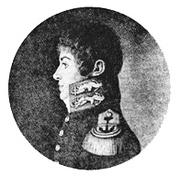
Louis Claude Desaulses De Freycinet
[Français] Louis Claude de Saulces (Desaulses) de Freycinet (né 1779; mort 1842) était un navigateur français, explorateur, géologue et géographe. Entre autres, il a navigué autour de la terre et produit la première carte complète de la côte de l'Australie.
[English]...